
Step 1: Arrival & Entrance into Grace
Step into the sanctuary through the main doors with an open heart. Take a moment of silence in the presence of the Blessed Sacrament to transition from external noise into prayerful stillness.
Established to serve the spiritual needs of the Chinese Catholic community and the faithful of Cebu, the Archdiocesan Shrine of the Most Sacred Heart of Jesus stands as a vibrant sanctuary of prayer, reconciliation, and Ignatian spirituality. Administered by the Society of Jesus (Jesuits), the shrine serves as a center for deep devotion to the Sacred Heart, offering daily masses, sacramental graces, and active outreach programs.
Guided by the motto Ad Majorem Dei Gloriam (For the Greater Glory of God), the shrine continues to be a sacred haven for pilgrims seeking peace, spiritual renewal, and a deeper encounter with Christ.
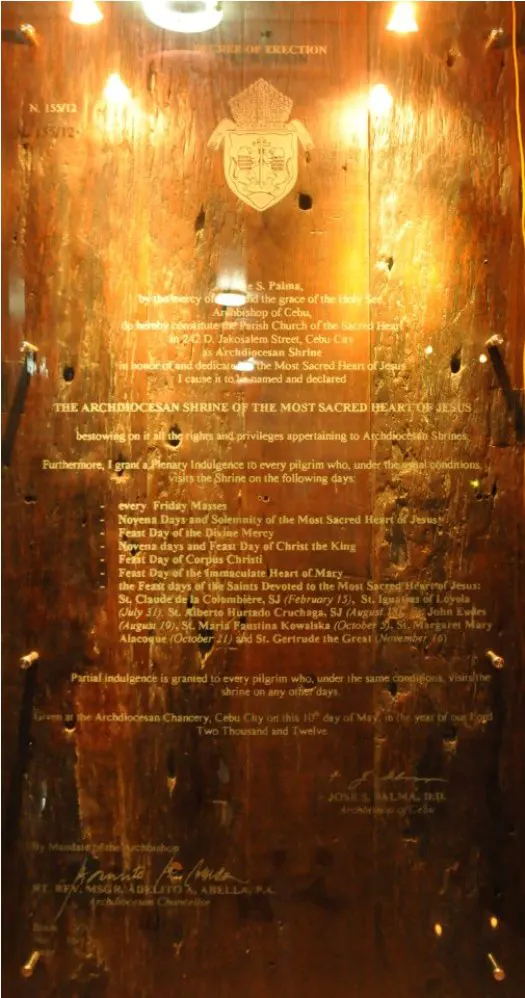
“I, Jose S. Palma, by the mercy of God and the grace of the Holy See, Archbishop of Cebu, do hereby constitute the Parish Church of the Sacred Heart in 242 D. Jakosalem Street, Cebu City as Archdiocesan Shrine in honor of and dedicated to the Most Sacred Heart of Jesus. I cause it to be named and declared THE ARCHDIOCESAN SHRINE OF THE MOST SACRED HEART OF JESUS, bestowing on it all the rights and privileges appertaining to Archdiocesan Shrines.”
Within the main church and surrounding chapels, several side altars and shrines invite pilgrims into focused prayer and intercession. Each altar honours saints and devotions closely tied to mercy, family, and Jesuit spirituality.
Dedicated to the Apostle of Divine Mercy, inviting devotion to the merciful heart of Jesus through the Divine Mercy Chaplet and image.
Honors the founder of the Society of Jesus, inspiring pilgrims toward discernment, spiritual exercises, and finding God in all things.
Dedicated to the patron saint of Catholic missions and co-founder of the Jesuits, zealously inspiring missionary work and evangelization.
A sacred space honoring the Blessed Virgin Mary under her Chinese title, reflecting the rich heritage and foundation of the parish community.
Dedicated to the Universal Patron of the Church and protector of families, providing a quiet space for prayers concerning work, family, and protection.
Honoring the first Filipino martyrs—including Cebu’s own St. Pedro Calungsod—as witnesses of unflinching faith and youth devotion.
According to Fr. Danny Huang, S.J, former Jesuit Provincial and now the Assistant to the Fr. General in Rome responsible for Asia-Pacific region, we are all pilgrims on a journey from birth to death. We are on a journey from birth to death. We are not at home, as we are on the road to God.”, he says. St. Ignatius embodies the concept of a true pilgrim. Our paths keep on changing just like Ignatius and it can be traced to our vulnerability, freedom and charity. After a cannonball shattered the leg of St. ignatius, he read about the lives of saints and that was a turning point of his life. In suffering, our defenses are down and we learn to listen and find a God. Twenty years after his conversion, he learned detachment and found a new freedom in following where God would lead him.
When all things are taken from us and yet we remain calm, that is freedom. When things don’t happen the way we wanted and yet we remain composed ad secure in faith, that is freedom. This led him to form a religious order called the Society in the Holy Land. The happiest people are those who are free. His group of friends (Francis Xavier, Peter Faber, Simon Rodrigues) had different personalities and motives in joining the society. Despire thier differences, St. Ignatius brought out the best in them by showing great patience and kindness towards all. We should interpret favourably the statements. “We are intellegnet, full of bright ideas, brimming with creativity but we cannot seem to work harmoniously with people. It’s the same everywhere – family, our workplace and our community”. This stems from giving a bad interpretation. From reacting without asking nor crarifying what’s the point or what did one mean? We are action but not the intention.”, says Fr. Huang According to Philip Endean, presupposition is the most important acclesionlogical principle of St. Ignatius. It teaches us to look at other pilgrims with the eyes of love. The end of our journey is God and St. Ignatius advises us to travel light, not to travel with demands and expectations and to see good in everyone. And last, to find God in all things.
St. Ignatius, from an arrogant soldier became one of the greatest Saints by finding God in all things and in doing all things for the greater glory of God.
Ad Majorem Dei Gloriam!
We are we now and where in God calling us in this stage of our journey/pilgrimiage?
Ruby Lim
SHP Treasurer
Step into the sanctuary through the main doors with an open heart. Take a moment of silence in the presence of the Blessed Sacrament to transition from external noise into prayerful stillness.
Approach the sanctuary of the Most Sacred Heart of Jesus. Offer your personal prayers, intentions, and thanksgiving to the Heart that has loved humanity so deeply.
Avail of the Sacrament of Penance offered before scheduled masses or upon appointment with a Jesuit priest to experience God’s healing forgiveness.
Visit the side altars—including the Divine Mercy, St. Ignatius, and Our Lady—lighting a votive candle as a physical sign of your ongoing petition.
Spend 10–15 minutes reflecting on your day or life path, using the Ignatian method to recognize God’s active presence and guidance in your journey.
Join the parish community in the celebration of the Holy Eucharist—the pinnacle of the pilgrim’s journey and source of spiritual nourishment.
Conclude your pilgrimage by taking the peace of Christ back to your family, workplace, and community in the spirit of Ad Majorem Dei Gloriam.